Running Sunglasses: The Features That Matter at Mile Five
Running asks more of sunglasses than any beach day — the bounce, the sweat, the fog, the two-hour wear — and the pair that survives mile five is engineered, not just tinted. The running-sunglasses guide: the demands, the features and the buying.


The Running Demands
Why regular shades fail: the bounce problem (the stride jolting frames loose — the nose-slide by kilometer two; the constant push-up tax that ruins runs), the sweat factor (the wet nose-and-temples defeating smooth plastic — the slip accelerating exactly when you’re working; the sweat-and-sunscreen slick from the sun doctrine), the fog cycle (the effort-heat meeting cool air — the lens fog at stops and lights; the airflow design mattering), the coverage-and-wind needs (the watering-eyes wind protection — the peripheral light and debris at speed; the wrap coverage case), and the weight-and-pressure reality (the two-hour wear making grams and pressure points matter — the temple-squeeze headache from the fit doctrine; the forgotten-they’re-on standard being the goal).

The Feature Checklist
What earns the run: the grip system (the rubberized nose pads and temple tips — the grip that IMPROVES with sweat being the category’s defining tech; the adjustable nose pads for fit dialing), the weight class (the sub-30-gram tier for distance — the frame materials that disappear), the lens choices (the polarized comfort for road glare from the shades doctrine — the photochromic option for dawn-to-day runs: the light-adaptive single pair; the contrast-boosting tints for trail per the trail doctrine; the cheap-lens optical-quality honesty: the distortion that headaches), the coverage-and-airflow balance (the wrap style blocking wind while venting fog — the frame gap engineering; the anti-fog coatings’ modest help), the security features (the retention-strap compatibility for the paranoid — the fit-over-features law: the best pair being the one that fits YOUR face per the fit doctrine), and the bonus specs (the UV-standard non-negotiable from the sun doctrine — the impact-resistant lenses for trail; the RX-and-insert options for the glasses-wearing runner).
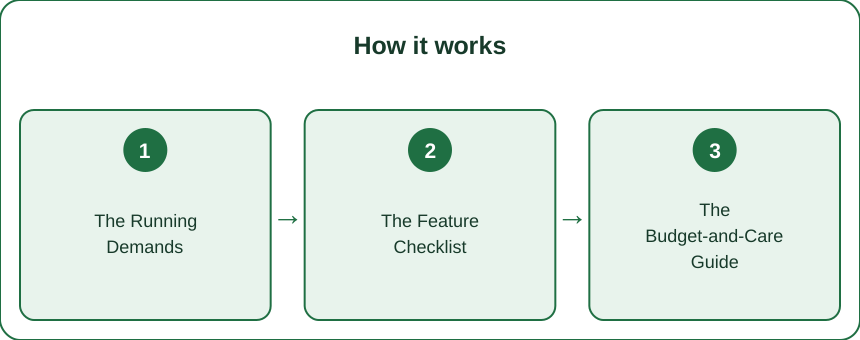
The Budget-and-Care Guide
Buying and keeping: the price honesty (the 30-60 running-specific tier delivering the grip-and-weight essentials — the premium brands buying lens refinement and durability; the sport-specific budget pair beating the fashion pair at any price per the budget doctrine), the try-on protocol (the shake-and-nod test — the head shaken hard in-store; the jog-in-place check; the pressure-point audit at the temples), the care habits (the fresh-water rinse after sweaty runs — the salt being coating death; the microfiber-only wiping from the care doctrine; the case-always storage; the shirt-hem-wipe habit named as the scratch factory), the replacement signals (the scratched-in-vision lenses and the stretched grip — the loose pair being the bounce problem returned), the multi-pair question (the road-and-trail lens split for the two-terrain runner — the one good photochromic pair serving most per the minimal doctrine), and the closing frame (the running sunglasses as performance equipment — the eyes protected from UV-wind-and-debris while the frame disappears; the mile-five test passed at the store; the squint, retired from the run). Rubber grip, under 30 grams, shake-test before buying: the shades, run-ready.
Running shades are engineered: rubberized grip that improves with sweat, sub-30-gram frames, and fog-venting wrap coverage — shake-test hard and jog in place at the store. A $30-60 sport-specific pair beats any fashion pair; rinse the salt off after sweaty runs and photochromic lenses cover dawn-to-day in one pair.
Keep Reading
This article is for general informational and styling purposes only. Fit, sizing, and product availability may vary.