Why Your Sunglasses Slide Down Your Nose When You Sweat and What Sport Frames Do Differently
Quick Answer: Ordinary sunglasses rest their weight on two small smooth contact points, and the moment sweat and skin oil form a film there, smooth plastic on wet skin becomes a bearing surface — gravity does the rest. Sport frames attack every term in that equation: hydrophilic rubber contact pads that grip harder when wet, temples that hold behind the ears instead of resting on top, wraparound geometry that spreads weight across more face, and frames light enough that there is less weight to hold. Fit is the remaining variable — grip points in the right places beat grip materials in the wrong ones.
Your nose is not too small. Your frames are too smooth.
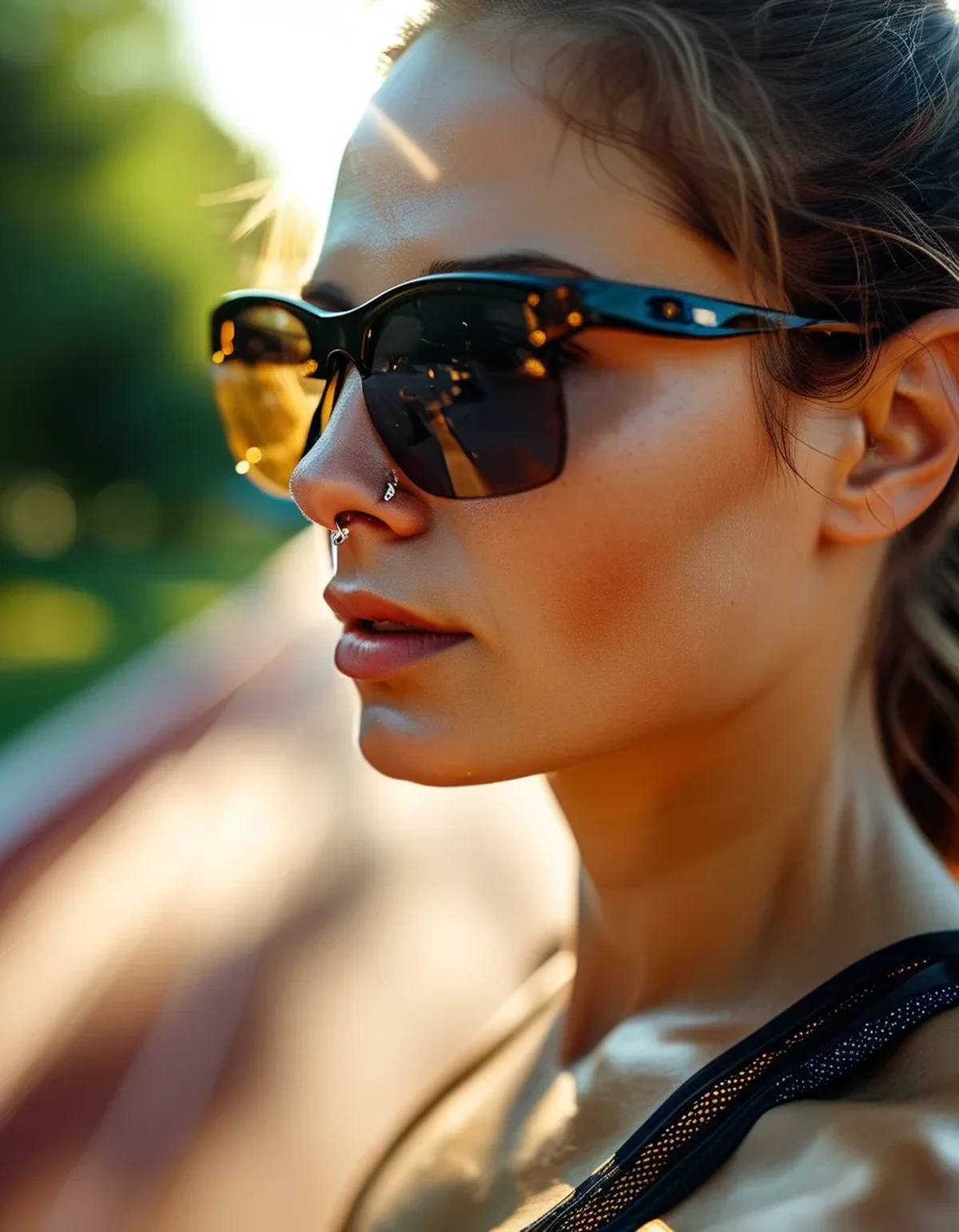
Why does sweat turn frames into a slide?
Because eyewear retention is a friction problem, and sweat deletes the friction.
A standard pair of sunglasses is held on your face by almost nothing: the frame’s weight presses two small pads or acetate ledges against the sides of your nose, and dry friction at those tiny contact patches is the entire suspension system. It works fine in air conditioning.
Add heat and the system fails predictably. Skin produces sweat and oil continuously in warm weather, and together they form a lubricating film at exactly the two points doing all the work. Smooth acetate on oiled wet skin has very little grip left, so the frame begins its migration — a millimeter per bounce, reset by the push up gesture you make four hundred times per run. Each push up also deposits fingertip oil on the bridge, feeding the film.
Three things accelerate the slide. Weight — heavier frames and glass lenses press harder and slide sooner, and any downhill or bent over position tips the geometry against you. Contact area — the smaller and smoother the pads, the faster the film defeats them; vintage style acetate frames with no pads at all are the worst offenders. Motion — running’s vertical bounce unloads and reloads the pads with every stride, letting the frame ratchet downward in tiny slips that never happen on a still face.
Which explains the pattern everyone notices: the frames are fine on the patio, hopeless on the trail, and worst of all in late summer humidity, when the film forms in the first five minutes and never dries.
What do sport frames actually do differently?
They redesign every contact point, and the materials are the headline.
Hydrophilic rubber is the core trick: it is engineered to increase grip as it gets wet. Where smooth acetate loses traction under a sweat film, hydrophilic pads at the nose and temple tips actually bind harder to damp skin — riders and runners notice their glasses feel more planted at mile four than mile one. It is the closest thing to cheating in this entire category, and it is standard on serious sport frames and absent on fashion ones.
The temples hold differently too. Fashion temples rest passively on top of the ears; sport temples curve to grip the sides of the head slightly and hook behind the ears, converting the frame from something perched to something lightly clamped. Combined with the nose pads, retention comes from three sprung contact zones instead of gravity and hope.
Wrap geometry spreads the load and adds coverage — a curved frame hugs the face so no single point carries the weight, while blocking the side glare and wind that flat frames admit.
And the whole thing weighs less — polycarbonate lenses and nylon frames cut the mass the pads must hold to a fraction of an acetate and glass fashion pair.
Fit turns the features on. Adjustable nose pads should be spread or pinched until the frame sits level with even pressure and the lenses clear your cheeks — cheek contact means sweat wicks onto the lens and the frame rides on the wrong surface. Temple tips should touch behind the ears without pressure headaches. And a brow gap for airflow matters more than it looks: sealed frames fog, and fog plus slide is the full late summer misery.

Myth vs Fact: Sport Sunglasses
Myth: tighter always means more secure. Fact: overtightened frames create pressure headaches, temple soreness, and pad marks, and they still slip once the film forms — clamping force cannot replace grip material. Secure comes from correct contact points in the right places, snug but forgettable.
Myth: slipping means your nose is the wrong shape for sunglasses. Fact: nose shapes vary enormously and so do frame fits — low nose bridge fits exist across most sport lines now precisely because standard frames sit wrong on millions of faces. If frames rest on your cheeks or slide instantly, you likely need a different bridge fit, not resignation.
Myth: expensive frames grip better. Fact: price buys lens quality and brand, not automatically retention. A mid priced frame with hydrophilic pads and proper temple grip outperforms a luxury acetate pair by miles. Check the materials list, not the logo.
Myth: retention straps are only for people on boats. Fact: a minimal strap or retainer is standard kit for trail runners, paddlers, and anyone whose frames cost more than a tank of gas — and modern low profile ones disappear behind the head. On the water, they are simply the difference between owning sunglasses and having owned them.
Myth: rubber pads last the life of the frames. Fact: rubber hardens, polishes smooth, and loses its hydrophilic behavior with age, sunscreen exposure, and skin oil. Grippy frames that turned slippery after two summers usually need five dollar replacement pads, not replacement frames — most major brands sell the pads separately for exactly this reason.
What maintenance and habits keep the grip working?
A rinse habit, a sunscreen sequencing fix, and a seasonal check — plus knowing that fall does not retire the problem.
Rinse the frames in fresh water after sweaty sessions. Sweat dries into salt and oil residue that glazes the rubber; thirty seconds under the tap with a drop of dish soap restores the pads’ surface and keeps the hydrophilic behavior alive. Dry with a clean cloth, not your shirt hem — the shirt redeposits the oil you just removed.
Fix the sunscreen sequence. Sunscreen applied to the nose immediately before the glasses go on is a lubricant application at the exact contact points. Apply face sunscreen early and let it absorb fully, then wipe the bridge of your nose with a tissue before the frames go on — the two minute gap is the difference between planted and skating. Late summer makes this non negotiable, since reapplication mid activity re greases the bridge; keep a small microfiber in your leggings pocket or hydration vest for the mid run wipe.
Audit the pads each season. Press a fingernail into the nose rubber: it should feel slightly tacky and give a little. Hard, shiny, or smooth means the rubber has aged out — order replacement pads and the frames are new again.
And do not shelve any of this in September. Fall running means a lower sun sitting directly in your sightline for more of the day, so sunglasses time goes up, not down, as temperatures fall — with the pleasant twist that cooler skin sweats less and the film forms slower. The frames that survived August humidity will feel supernatural in October air.
One boundary note: frames that slide because of persistent facial swelling, or eyewear pain that will not resolve with fit changes, is optician territory — a professional fitting costs little and ends multi year problems in ten minutes.

FAQ: Slipping Sunglasses Questions, Answered
Can I fix my regular fashion sunglasses instead of buying sport frames?
Partially. Stick on silicone nose pads and slide on temple grips cost a few dollars and add real friction to smooth acetate. They will not match a true sport frame under hard sweat, but for walks and errands they often end the push up habit entirely.
What should I look for first when buying sport sunglasses?
In order: hydrophilic rubber at nose and temples, weight under about thirty grams, adjustable nose pads if your bridge is low, and a wrap that clears your cheeks. Lens tint comes after retention — the best lens does nothing from the pavement.
Why do my glasses slip even more after I reapply sunscreen?
Because you re lubricated the contact points — fresh sunscreen is the slickest thing that touches your face all day. Let it absorb, then wipe the bridge and pad contact areas before the frames go back on.
Do anti slip wax sticks for glasses work?
They add tack to the contact points and genuinely help through a session, with the trade off of residue that needs regular cleaning. Think of them as the balm-style consumable fix, with replacement pads and better frames as the structural one.
TL;DR:
- Frames are held on by friction at tiny nose contact points, and sweat plus skin oil deletes that friction on schedule.
- Sport frames counter with hydrophilic rubber that grips harder wet, behind the ear temple hold, wrap geometry, and low weight.
- Rinse the pads after sweaty wear, let sunscreen absorb and wipe the bridge before frames go on, and replace hardened rubber pads instead of whole frames.
- The problem peaks in late summer humidity but the season ahead needs the glasses more — fall’s low sun sits straight in your eyes.
Tonight, press a fingernail into your nose pads. If they feel like plastic instead of rubber, five dollars of replacement pads just solved your whole summer.
Keep Reading
This article is for general informational and styling purposes only. Fit, sizing, and product availability may vary.