Why Sport Sunglasses Feel Wrong in Autumn Even Though the Sun Is Lower
Quick Answer: A low autumn sun sits directly in your sightline rather than overhead, so a dark summer lens blocks brightness without stopping the glare, while shaded sections of your route become too dim to see through. Cold weather also reduces nose and temple grip and increases fogging. Switch to a lighter tint (categories 1 to 2), prioritise coverage over darkness, and expect to need a different lens than the one that worked in July.
The sun is lower and weaker.
You are squinting more than you did in August.
Darkness was never the thing solving glare.
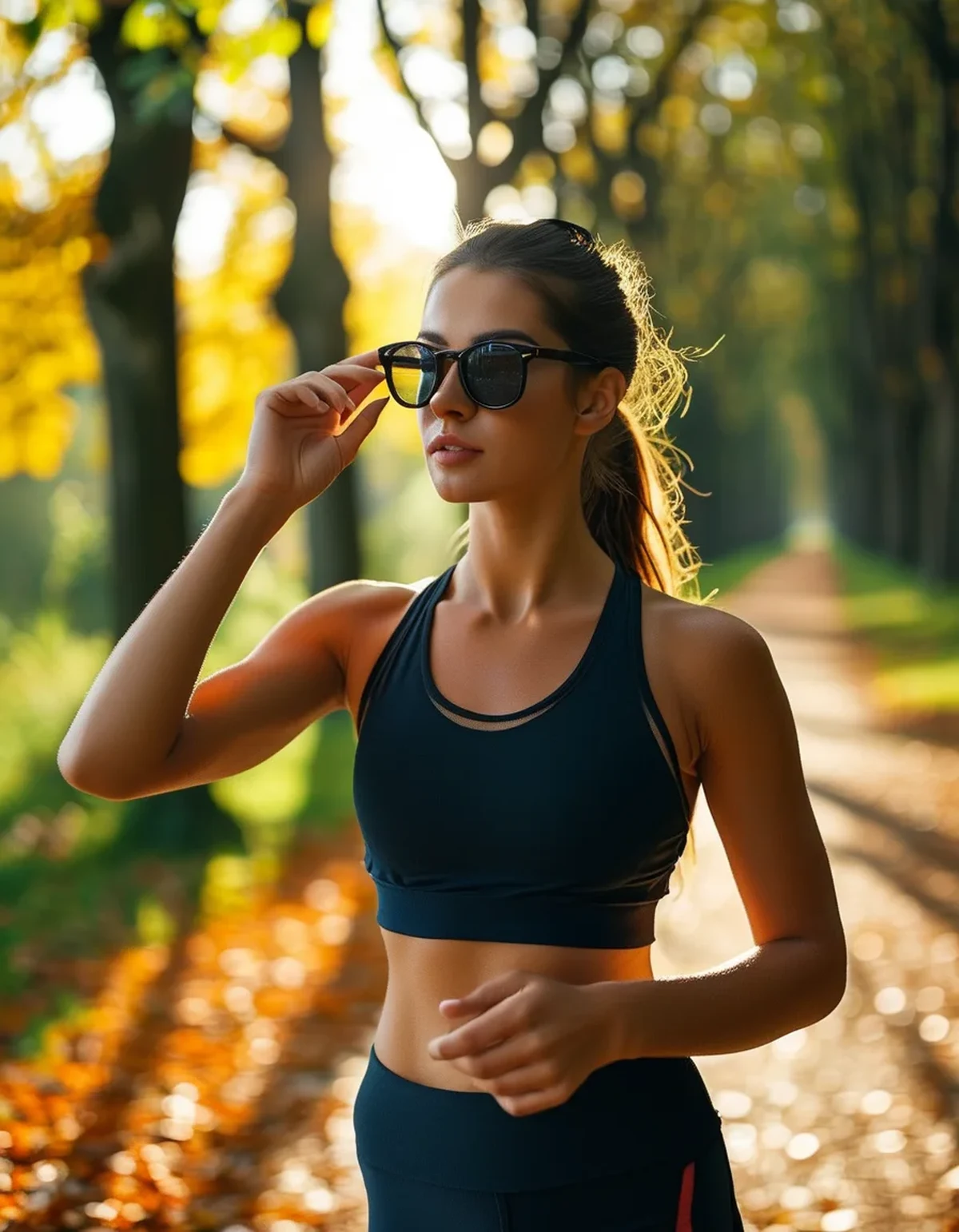
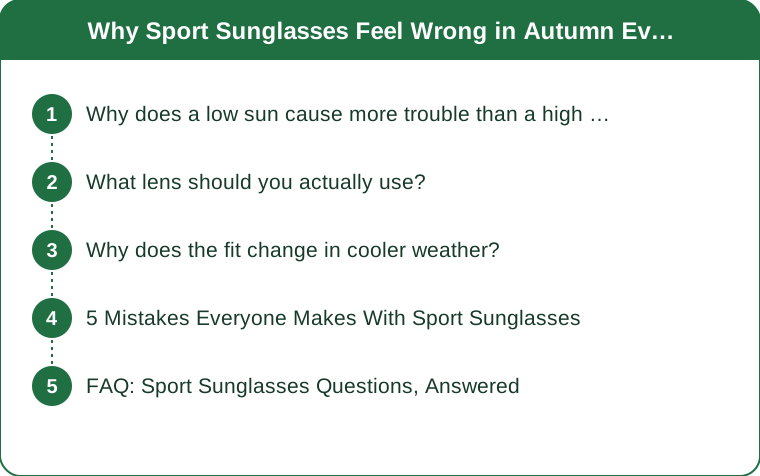
Why does a low sun cause more trouble than a high one?
Because of the angle, not the intensity.
Low sun enters directly under and around the lens. A summer sun overhead is blocked by the frame and your brow. An autumn sun at 20 degrees above the horizon comes in horizontally, straight past the edges of most lenses.
Light bounces off wet surfaces at low angles. Horizontally polarised glare off wet roads, paths and car windscreens is at its worst when the sun is low — exactly the situation autumn produces every morning and evening.
Contrast becomes the problem, not brightness. Long shadows mean your route alternates between bright and dark every few seconds. Your eyes cannot adapt that quickly, and a dark lens makes the shadowed sections genuinely hard to see.
A dark lens dilates your pupils. Behind a very dark lens your pupil opens, which makes the light that gets around the edges more dazzling, not less. Dark lenses with poor coverage are worse than lighter lenses with good coverage.
Sunrise and sunset now overlap with the times you actually train. In summer you ran at 7am with the sun already high. In October, 7am is exactly when the sun is on the horizon in your face.
Which points at the fix: coverage, wrap and polarisation matter more in autumn than tint darkness does.
What lens should you actually use?
Six options, and most people are wearing the wrong one from September onward.
Category 1 to 2 for autumn and winter. Lens categories run 0 to 4. Summer sport lenses are typically category 3. Category 2 lets through noticeably more light, which is what you need when half your route is in shadow.
Polarised for wet roads and low sun. Polarisation cuts horizontally reflected glare specifically, which is the dominant problem at low sun angles. The caveat: it can make some screens hard to read and reduce your ability to see ice, so cyclists and drivers should consider that trade.
Rose, amber and brown tints enhance contrast. They filter blue light and increase definition, which helps in the flat, overcast light that autumn produces most days. This is why so many trail and cycling lenses are amber.
Photochromic for variable conditions. They darken and lighten with UV. Excellent for routes that alternate between open and wooded sections. Two caveats: they respond over 30 to 60 seconds, not instantly, and most do not darken properly behind a car windscreen.
Clear or very light lenses for early and late. Sometimes you need wind and debris protection with no tint at all. A clear lens is a legitimate choice for a 6:30am autumn run.
Coverage above all. A wrapped frame that blocks light from the sides and below does more for low-sun comfort than any tint choice.
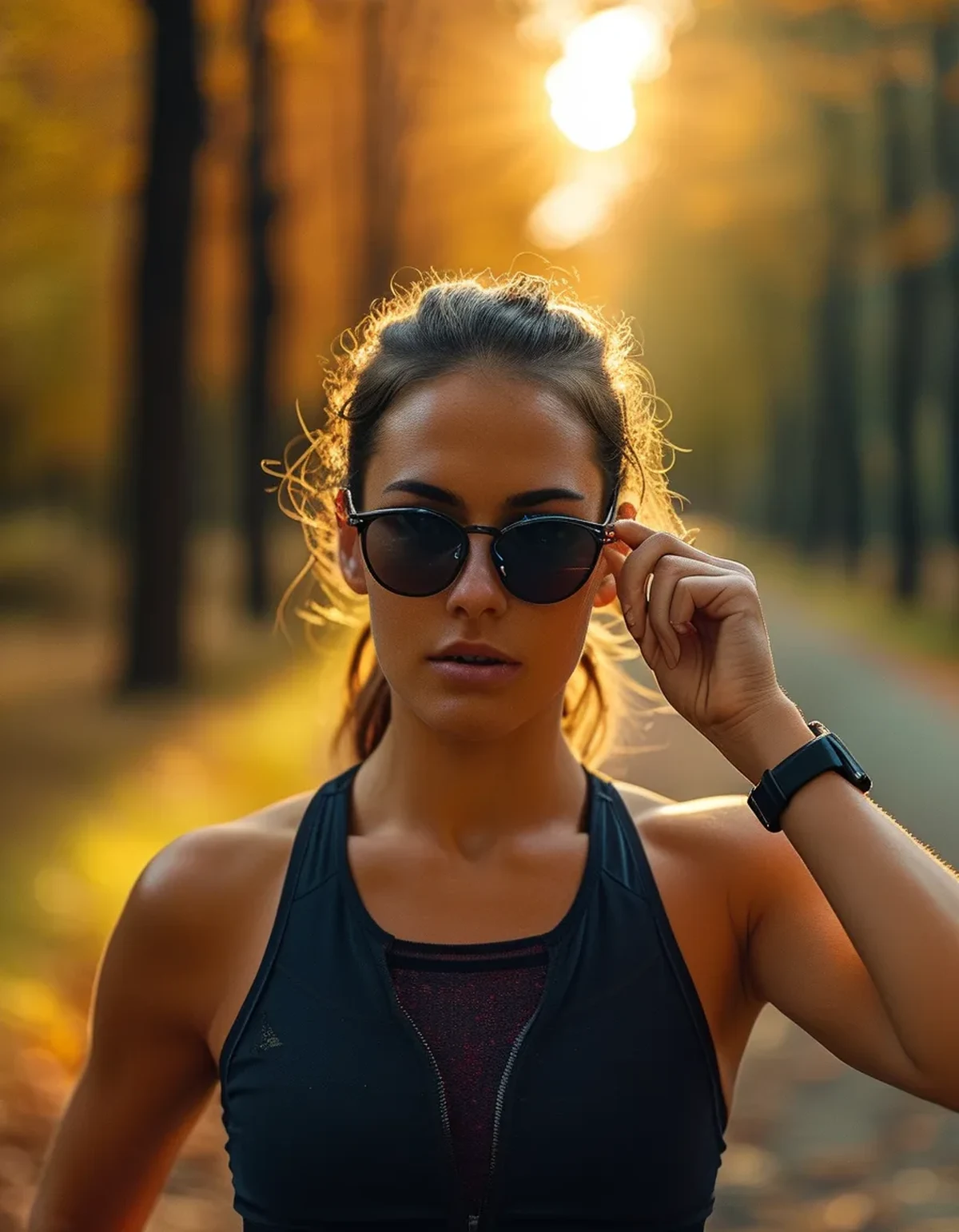
Why does the fit change in cooler weather?
Several small things, all in the same direction.
Cold reduces skin oil, but sweat still slips. Counterintuitively, autumn running can be worse for slipping than summer — you sweat enough for the nose pads to lose grip but not enough for the frame to be constantly readjusted, so it creeps down unnoticed.
Fogging increases substantially. Warm, humid air from your face meets a cold lens and condenses. This is fundamentally a temperature-difference problem and it gets worse as the gap widens.
Airflow drops when you cover up. A buff or high collar directs warm breath upward into the lens. This is the single most common cause of autumn fogging and the easiest to fix.
Frame materials stiffen slightly in cold, which changes how the temples grip.
Hats and headbands change the sit. Adding a cap or headband alters the angle the frame sits at, and a pair adjusted for bare-headed summer running may sit badly with a hat.
Fixes: hydrophilic anti-fog treatment on the inside, keep breath directed away from the lens, choose frames with vents at the top of the lens, and adjust nose pads with your autumn headwear on rather than without it.
5 Mistakes Everyone Makes With Sport Sunglasses
Mistake one: using one pair year-round. A category 3 summer lens is genuinely wrong for October. Two lenses, or an interchangeable-lens frame, covers the whole year properly and costs less than most people expect.
Mistake two: choosing darkness over coverage. A dark lens with gaps at the sides dilates your pupils and then lets light in around the edges. A lighter, well-wrapped lens is more comfortable in almost every condition.
Mistake three: assuming dark equals UV protection. They are unrelated. UV protection comes from a coating or the material, and a clear lens can offer full UV400 protection while a dark lens can offer little. Check the label rather than the tint.
Mistake four: wearing polarised lenses for everything. Excellent for wet roads and low sun; less good for reading a bike computer or a phone screen, and they can mask the sheen that warns you about ice.
Mistake five: cleaning them with a shirt. Dry-wiping a lens grinds dust across a coated surface and scratches it. Rinse with water first, then a microfibre cloth. This is how most sport lenses actually die.
And the one that ruins otherwise good lenses: leaving them in a hot car. Heat degrades coatings and can warp frames, and the damage is permanent.
FAQ: Sport Sunglasses Questions, Answered
What lens category do I need for autumn?
Category 1 to 2. Summer sport lenses are usually category 3, which is too dark once half your route is in shadow.
Are polarised lenses worth it?
For low sun and wet surfaces, yes — polarisation targets exactly that glare. Less ideal for reading screens or spotting ice.
Why do mine fog up in cold weather?
Warm breath meeting a cold lens. Buffs and high collars direct breath upward and are the usual culprit. Vented frames and anti-fog treatment help.
Does dark mean more UV protection?
No. UV protection is independent of tint. Check for UV400 or 100% UVA/UVB on the label.
What tint is best for overcast days?
Rose, amber or brown. They enhance contrast in flat light, which is most of autumn.
Are photochromic lenses good for running?
Yes, for variable light. They take 30 to 60 seconds to change, and most do not darken behind a windscreen.
How do I stop them slipping?
Adjustable or rubberised nose pads, and adjust them wearing whatever hat or headband you actually run in. The fit changes with headwear.
TL;DR:
- A low autumn sun enters from the side and below, past the edges of most lenses — coverage beats darkness.
- Dark lenses dilate your pupils, making the light that leaks around them worse.
- Switch to category 1 to 2, and consider polarised for wet roads and low glare.
- Rose, amber and brown tints enhance contrast in flat overcast light.
- Buffs and high collars direct breath upward and cause most autumn fogging.
Before your next early run, check what category your lenses are. If they say 3, that is why you have been squinting since September.
Keep Reading
This article is for general informational and styling purposes only. Fit, sizing, and product availability may vary.