Why Low Autumn Sun Is Harder on Your Eyes Than Summer Glare
Quick Answer: In autumn the sun sits low on the horizon for much of the usable training day, which puts it directly in your line of sight rather than overhead. Low-angle light bypasses your brow, hat brim, and the top of most sunglasses, and it reflects off wet roads at exactly the angle that maximizes glare. Less total light, far more of it hitting your eyes directly — which is why people who never wear sunglasses in summer struggle in October.
The sun is objectively weaker than it was in July, and you’re squinting more. That’s not a contradiction — you’re looking straight at it now.
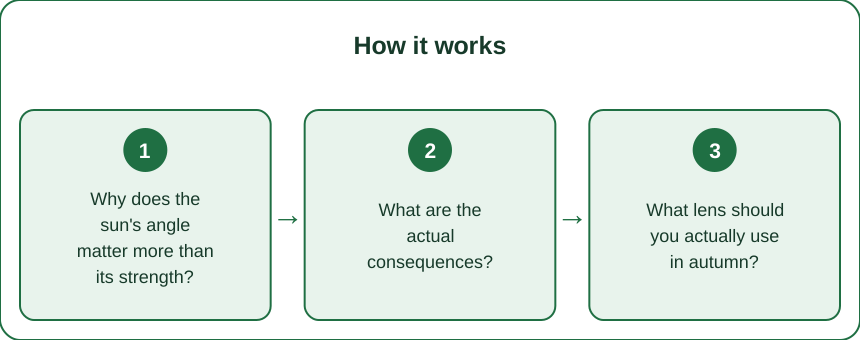
Why does the sun’s angle matter more than its strength?
Because your eye is well-protected from above and poorly protected from in front.
Summer sun is overhead. At midday in July the sun sits at a high angle, and your brow ridge, eyelashes, and any hat brim intercept most of the direct light. Intensity is high but the geometry is favorable, and you mostly deal with reflected light rather than direct.
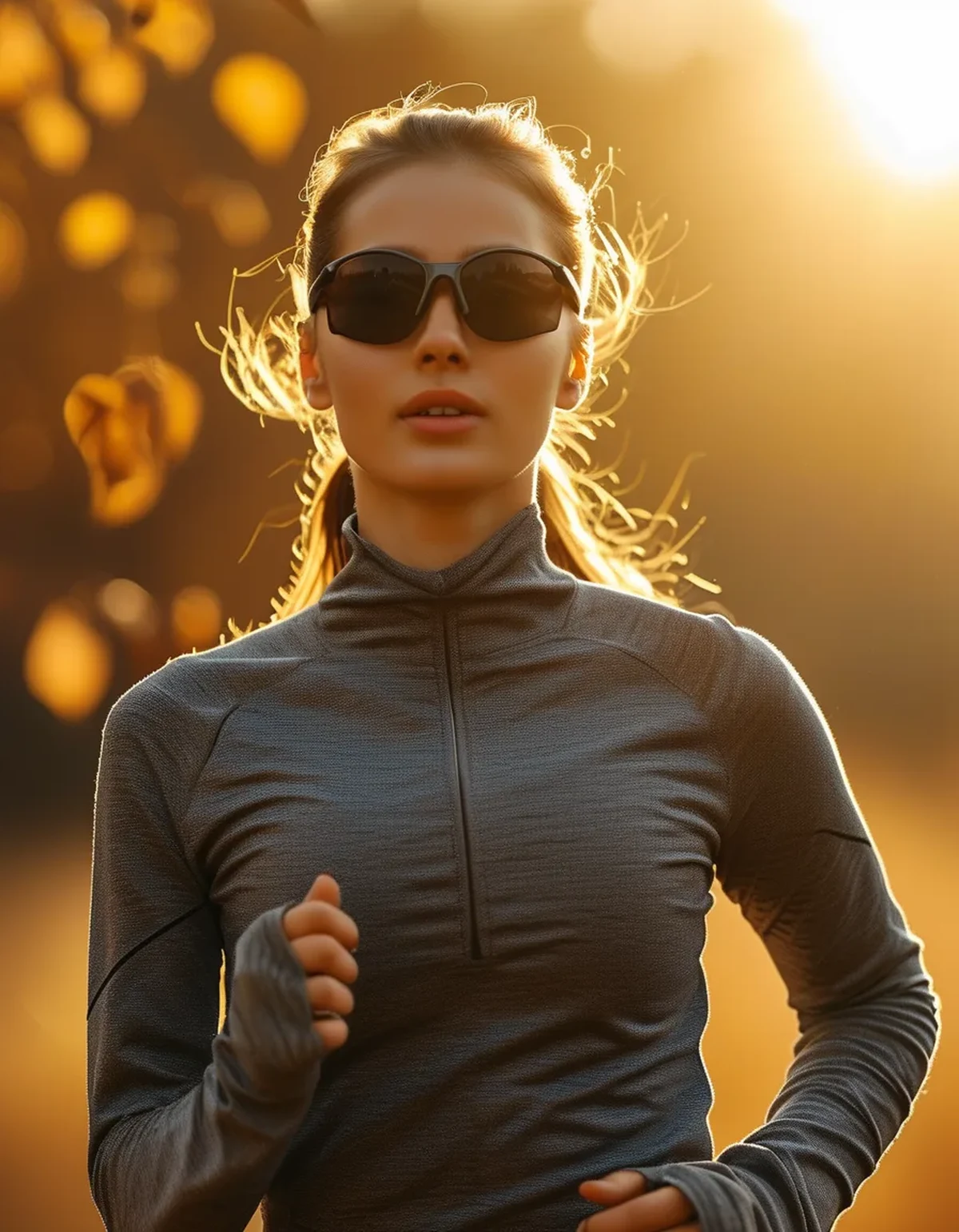
Autumn sun sits low for most of the day. By late October, the sun’s maximum elevation is much lower, and in the morning and late afternoon — when most people train — it’s close to the horizon. That puts it in the same plane as your line of sight, where none of your natural protection applies.
Glare from wet surfaces peaks at low angles. Light reflecting off a wet road or a puddle polarizes most strongly at a shallow angle of incidence, which is precisely the autumn condition. A wet road under a low sun produces genuinely more disabling glare than a dry road under a high one.
Low-angle light travels through more atmosphere, which shifts it toward the warm end of the spectrum. The golden quality that looks beautiful in photographs is a lot of long-wavelength light entering your eye at a shallow angle, and it scatters inside the eye in a way that reduces contrast.
What are the actual consequences?
More than discomfort, and worth taking seriously if you train outdoors regularly.
Contrast sensitivity drops sharply. Scattered light inside the eye washes out edges, which is why you can be looking straight at a curb, a root, or a pothole and not see it. This is the practical safety issue in autumn — the trip hazards are the same as in summer and your ability to see them is worse.
Squinting changes your form. Sustained squinting tightens the muscles around the eyes and forehead and often the neck and shoulders with them. Runners frequently report tension headaches after low-sun sessions and attribute them to effort rather than to light.
Pupil response can’t keep up. Riding or running toward and away from a low sun means your pupils are constantly readjusting, and the transitional periods are when vision is worst. Tree-lined paths in autumn are the extreme case — rapid alternation between shade and direct low sun.
UV exposure doesn’t disappear in autumn. UV drops with the sun angle but doesn’t stop, and the direct line of sight means more of what remains reaches your eyes. Cumulative UV exposure to the eye is associated with cataract and other long-term risks, which is the argument for year-round protection rather than seasonal.
Fall foliage adds an unexpected factor — bright yellows and oranges reflect a lot of light at eye level along tree-lined routes, adding a diffuse brightness on top of the direct sun.
What lens should you actually use in autumn?
Different from summer, and the change most people don’t make.
Drop the tint category. Summer lenses are typically category 3 — dark, designed for high overhead intensity. In autumn’s lower overall light, a category 3 lens is often too dark for shaded sections, which means you push them onto your head at exactly the wrong moment. Category 2 is the autumn workhorse: enough reduction for direct low sun, still usable under trees and cloud.
Polarization is more valuable now than in summer. Polarized lenses specifically cut light reflected off horizontal surfaces, which is precisely the wet-road, low-angle glare that defines autumn. If you own one polarized pair, autumn is when it earns its cost.
Consider a contrast-enhancing tint. Rose, amber, and copper tints selectively reduce blue wavelengths, which increases perceived contrast in flat and overcast light. In autumn’s mix of low sun and gray days, these often outperform a neutral gray that simply darkens everything.
Photochromic lenses are genuinely well-suited to autumn because the light varies so much within a single session. Their weakness — slow transition — matters less than the alternative of a fixed tint that’s wrong half the time.
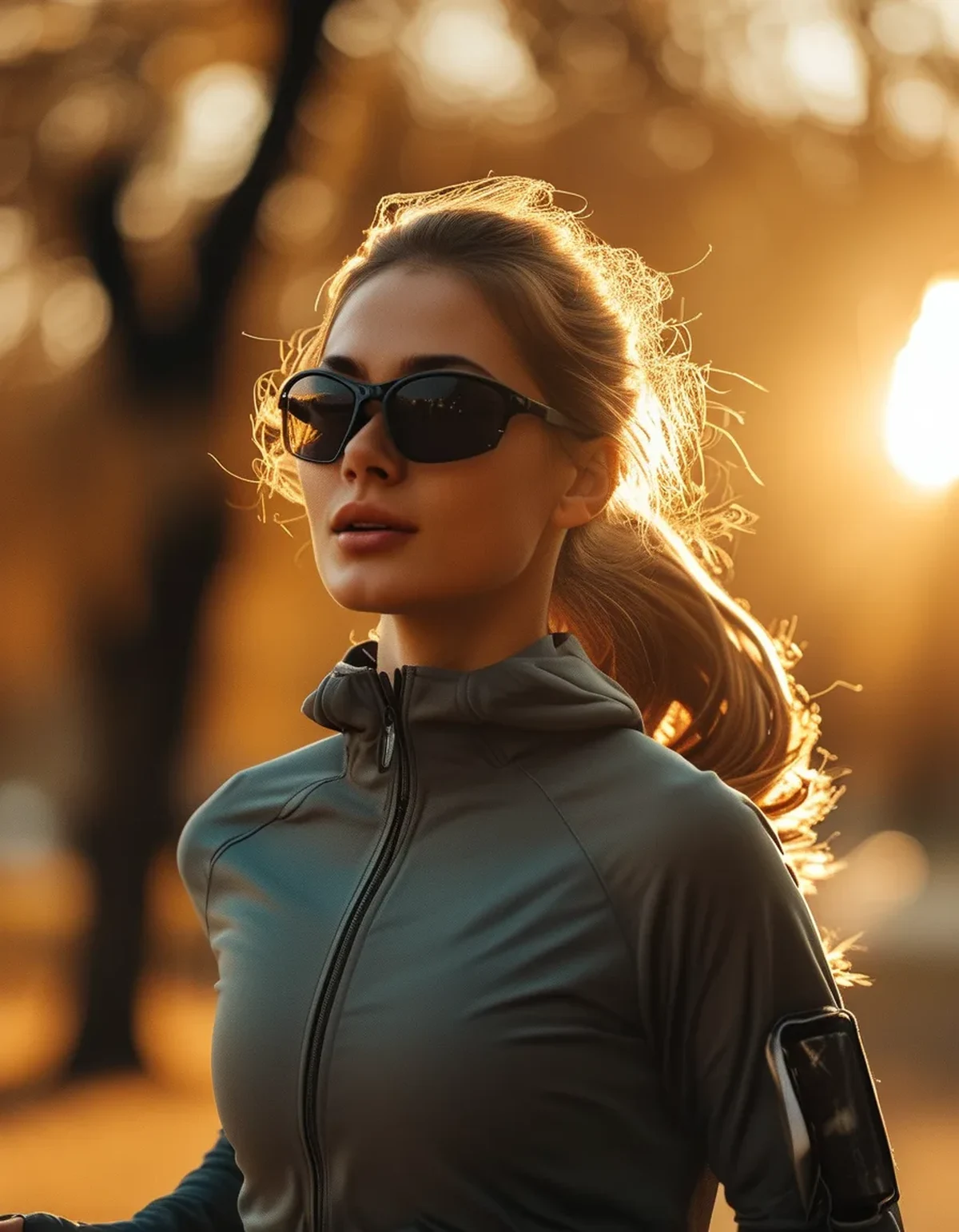
Coverage matters more than the lens. A low sun means light entering from in front and slightly above, so a lens with good vertical coverage and a wraparound shape blocks far more than a small flat lens with the same tint. The gap between the top of the frame and your brow is where autumn light gets in, which is why a hat brim plus sunglasses works better in autumn than either alone.
One caution on polarization
Polarized lenses can make some phone and bike computer screens hard to read at certain angles. Worth checking with your own devices before buying.
Myth vs Fact: Autumn Eye Protection
Myth: You don’t need sunglasses once summer ends. Fact: The sun’s angle puts it directly in your line of sight for most of the autumn training day, which delivers more direct light to the eye than a high summer sun does.
Myth: Darker lenses are always better in bright conditions. Fact: A lens too dark for the ambient light gets pushed up onto your head, at which point it protects nothing. Category 2 with good coverage beats category 3 that you take off.
Myth: Polarized lenses are a marketing upgrade. Fact: They target reflected glare off horizontal surfaces specifically, which is the dominant autumn problem. This is one of the few genuinely condition-specific optical features.
Myth: UV is only a summer concern. Fact: UV reaching the eye drops in autumn but doesn’t stop, and the direct line of sight means proportionally more of it enters the eye rather than being blocked by the brow.
Myth: Squinting is just a comfort issue. Fact: Squinting reduces your visual field, tightens muscles around the eyes and neck, and is a common source of post-run tension headaches — while doing little for the contrast loss that’s the actual problem.
FAQ: Autumn Sport Sunglasses, Answered
What lens category should I use in autumn?
Category 2 for most conditions. Category 3 is often too dark once you’re under trees or in the shade of buildings.
Are polarized lenses worth it for running?
In autumn especially, yes — wet roads under a low sun are exactly what polarization addresses. Check that they don’t interfere with your watch or bike computer display.
What tint works best in mixed autumn light?
Rose, amber, or copper for contrast enhancement in flat light. Neutral gray is better if you mostly train in direct sun.
Do I still need UV protection on cloudy autumn days?
Yes. Cloud reduces visible brightness far more than UV, which is why overcast days feel safe and aren’t entirely.
Why do my sunglasses fog more in autumn?
Cooler air outside the lens and warm moist air from your face inside it — a bigger temperature differential than summer. Vented frames and a slight gap at the nose help.
Is a hat brim enough on its own?
Not for low-angle sun. A brim handles overhead light; autumn light comes from in front, under the brim.
TL;DR:
- Autumn sun sits low and directly in your line of sight, bypassing brow, lashes, and hat brim
- Reflected glare off wet roads peaks at exactly these shallow angles
- Contrast sensitivity drops, which is why trip hazards get harder to see even in decent light
- Switch from category 3 to category 2 lenses — a lens too dark ends up on your head
- Polarization and warm contrast tints are more useful in autumn than in summer
- Coverage and frame shape matter more than tint darkness when the light comes from in front
The sun got weaker and moved into your eyes. Those aren’t in conflict — the second one matters more.
Keep Reading
This article is for general informational and styling purposes only. Fit, sizing, and product availability may vary.