Why Your Sport Sunglasses Fog Up Mid-Run (and the Fix That Actually Works)
Quick Answer: Fogging happens when warm, humid breath and sweat vapor get trapped against the lens with too little airflow behind it. Look for sunglasses with venting gaps or channels, and use an anti-fog wipe on the inside of the lens before runs.
You paid extra for sunglasses marketed specifically for running, and they still fog up the moment you stop at a light or slow your pace. That’s an airflow problem, not a defective pair.

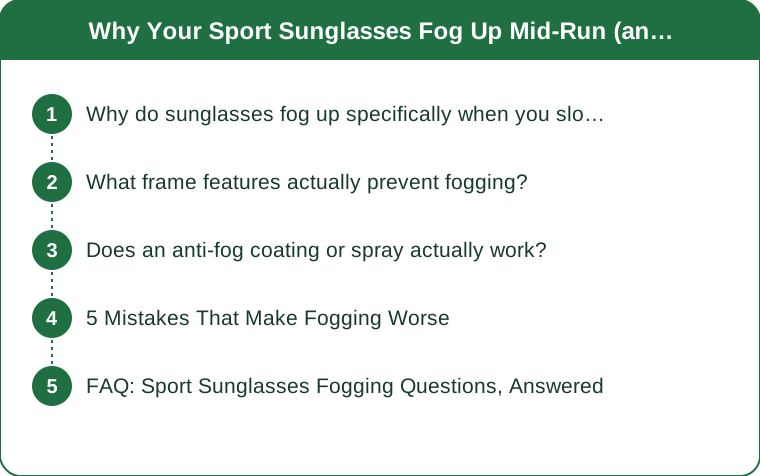
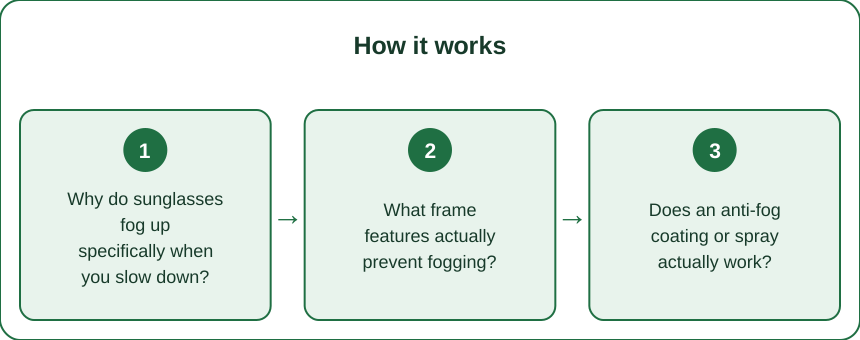
Why do sunglasses fog up specifically when you slow down?
Fogging happens when warm, humid air from your breath and sweat gets trapped against the cooler lens surface without enough airflow to clear it away. At running pace, forward motion pushes air behind the lens and clears this moisture; slowing down or stopping removes that airflow and lets fog build immediately.
This is why fogging often feels sudden and specifically tied to pace changes, rather than happening consistently throughout a run.
What frame features actually prevent fogging?
Venting gaps — small channels built into the frame near the brow or temple — let air circulate behind the lens continuously, which is the single biggest design factor in fog resistance. Sunglasses marketed as ‘running’ or ‘cycling’ specific usually include this, while fashion-oriented sport sunglasses often don’t, despite looking similar.
A snug-but-not-flush fit that leaves a small air gap between the lens and your face also helps circulation, whereas a tightly wraparound fit that seals against your skin traps moisture more easily.

Does an anti-fog coating or spray actually work?
Yes, to a meaningful degree — anti-fog wipes or sprays applied to the inside of the lens before a run create a thin film that prevents water vapor from condensing into visible droplets. This won’t fully replace good ventilation, but it’s an effective supplement, especially for frames that fit close to the face.
Reapplying every few runs (most coatings wear off with washing or wiping) keeps the effect consistent rather than assuming a one-time application lasts indefinitely.
5 Mistakes That Make Fogging Worse
- Choosing a fully wraparound, sealed-fit frame for looks over ventilation.
- Wiping lenses with a dry shirt, which removes any anti-fog coating faster.
- Storing sunglasses in a hot car, which can degrade coatings over time.
- Skipping the anti-fog wipe and assuming venting gaps alone are enough in high humidity.
- Running in humid weather with fashion sunglasses not designed for airflow at all.
FAQ: Sport Sunglasses Fogging Questions, Answered
Do all running sunglasses include venting gaps?
Not always — check specifically for brow or temple vents, since some running-marketed frames prioritize style over airflow design.
How often should I reapply anti-fog spray?
Roughly every few runs, or sooner if you notice fogging returning, since most coatings wear off with cleaning and use.
Does humidity make fogging worse regardless of frame design?
Yes — even well-vented frames fog more in very humid conditions, though they’ll clear faster once you’re moving again compared to sealed frames.
TL;DR:
- Fogging happens when trapped warm, humid air meets the cooler lens with no airflow
- Venting gaps in the frame are the biggest design factor in preventing fog
- Anti-fog wipes help but work best alongside good ventilation, not instead of it
- A sealed, wraparound fit for looks often trades away fog resistance
Check your current pair for actual vent gaps near the brow — if there aren’t any, that’s likely the real source of the problem, not the coating.
Keep Reading
This article is for general informational and styling purposes only. Fit, sizing, and product availability may vary.