Why Lens Tint Color Matters More Than Style for Sport Sunglasses
Quick Answer: Lens tint changes how well you see contrast and depth in specific light conditions — gray lenses suit bright sun, brown or amber suit variable light, and rose or yellow suit low light, so matching tint to your typical conditions matters more than color trends.
Most people pick sport sunglasses by frame style alone. The lens tint is actually doing most of the functional work.
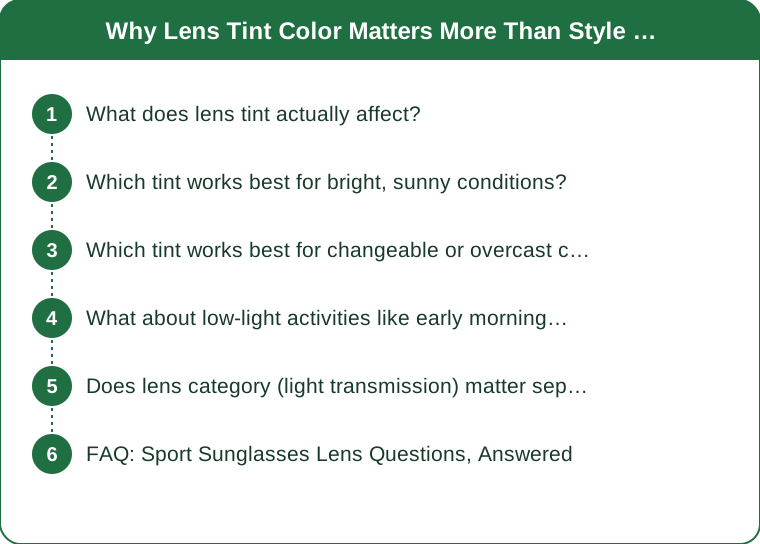
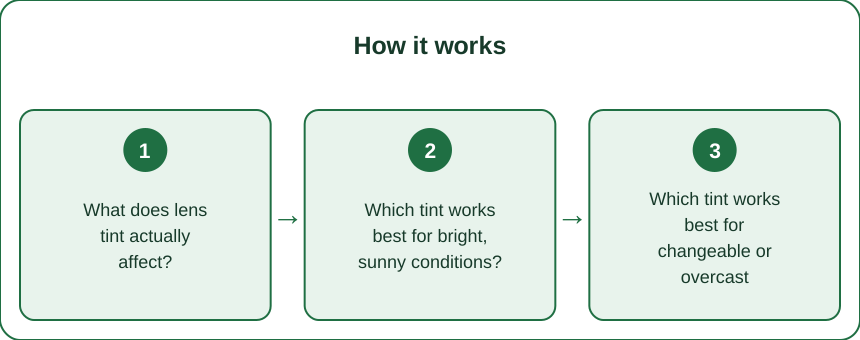
What does lens tint actually affect?
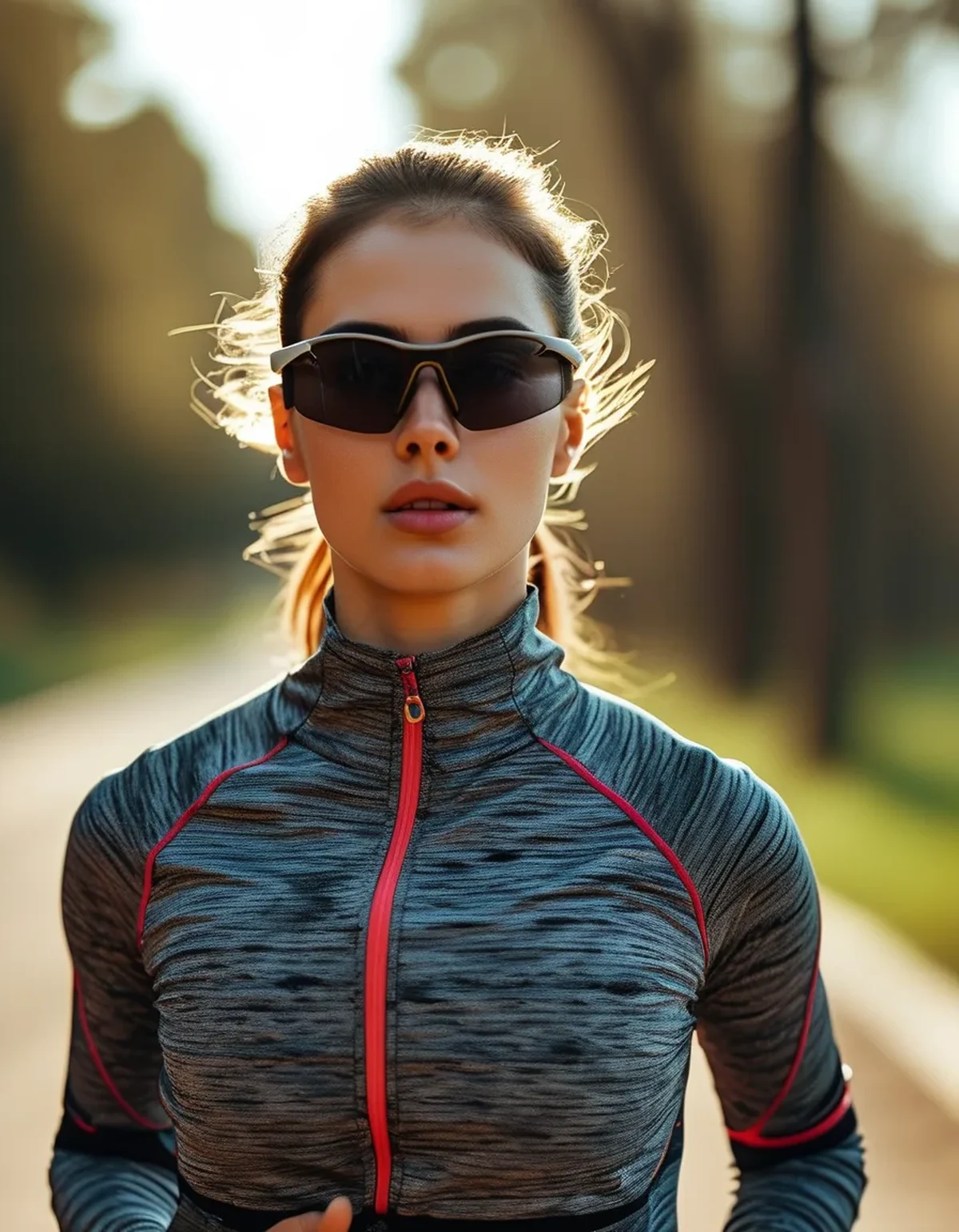
Lens tint affects how much visible light reaches your eyes and how it filters certain wavelengths, which changes contrast perception and how well details stand out against a background. This matters far more for performance than most shoppers realize, since a lens that looks stylish but mismatches your typical lighting conditions can actually make it harder to see clearly during activity.
Which tint works best for bright, sunny conditions?
Gray or green-tinted lenses are generally best for very bright, sunny days since they reduce overall brightness without significantly distorting color perception, which matters for activities like running or cycling on sunny roads where accurate color and depth judgment (like seeing curbs or other people) is important.
Which tint works best for changeable or overcast conditions?
Brown or amber tints tend to enhance contrast in variable or partly cloudy light, making it easier to pick out uneven terrain or obstacles compared to gray lenses, which can feel slightly flat in lower-light conditions. This is why many trail runners and hikers prefer amber-toned lenses over simple gray.

What about low-light activities like early morning or dusk runs?
Rose or yellow-tinted lenses boost contrast significantly in low light, which helps with depth perception on dim trails or roads at dawn or dusk, though they’re less effective at cutting brightness during full midday sun. Using a low-light tint on a very bright day can actually feel too bright rather than protective.
Does lens category (light transmission) matter separate from tint color?
Yes — lens category refers to how much total light is blocked (rated roughly 0 to 4), while tint color refers to which wavelengths are filtered; a lens can be dark in category but poorly suited in tint color for your activity, or vice versa. Both dimensions matter together, not just one or the other.
FAQ: Sport Sunglasses Lens Questions, Answered
Do polarized lenses change tint recommendations?
Polarization reduces glare specifically from reflective surfaces like water or wet roads and can be combined with most tint colors, so it’s an additional feature rather than a replacement for choosing the right tint.
Can one pair of sunglasses work for all lighting conditions?
Some photochromic lenses adjust tint darkness automatically based on light levels, which is a reasonable one-pair solution, though dedicated single-tint lenses often perform slightly better for their specific ideal condition.
Is a darker lens always better for sport use?
No — a lens that’s too dark for the actual light condition can reduce visibility and reaction time, which matters for fast-moving outdoor activities.
TL;DR:
- Lens tint changes contrast and depth perception, not just brightness
- Gray or green suits bright sun, amber suits changeable light, rose or yellow suits low light
- Lens category (darkness) and tint color are two separate things to check
- Photochromic lenses are a reasonable all-condition compromise
Next sunglasses purchase, check the tint against your usual training conditions before the frame style — it changes more than people expect.
Keep Reading
This article is for general informational and styling purposes only. Fit, sizing, and product availability may vary.